
- NEFSALF
- October 30, 2023
Food security is defined by the Oxford Dictionary as “the state of having reliable access to a sufficient quantity of affordable, nutritious food”. Urban agriculture is one of many ways that individuals can increase their access to sufficient nutritious food, promoting food security. In addition, it is a way that individuals can ensure that their communities and the people they care for also have the nutrients that they need.
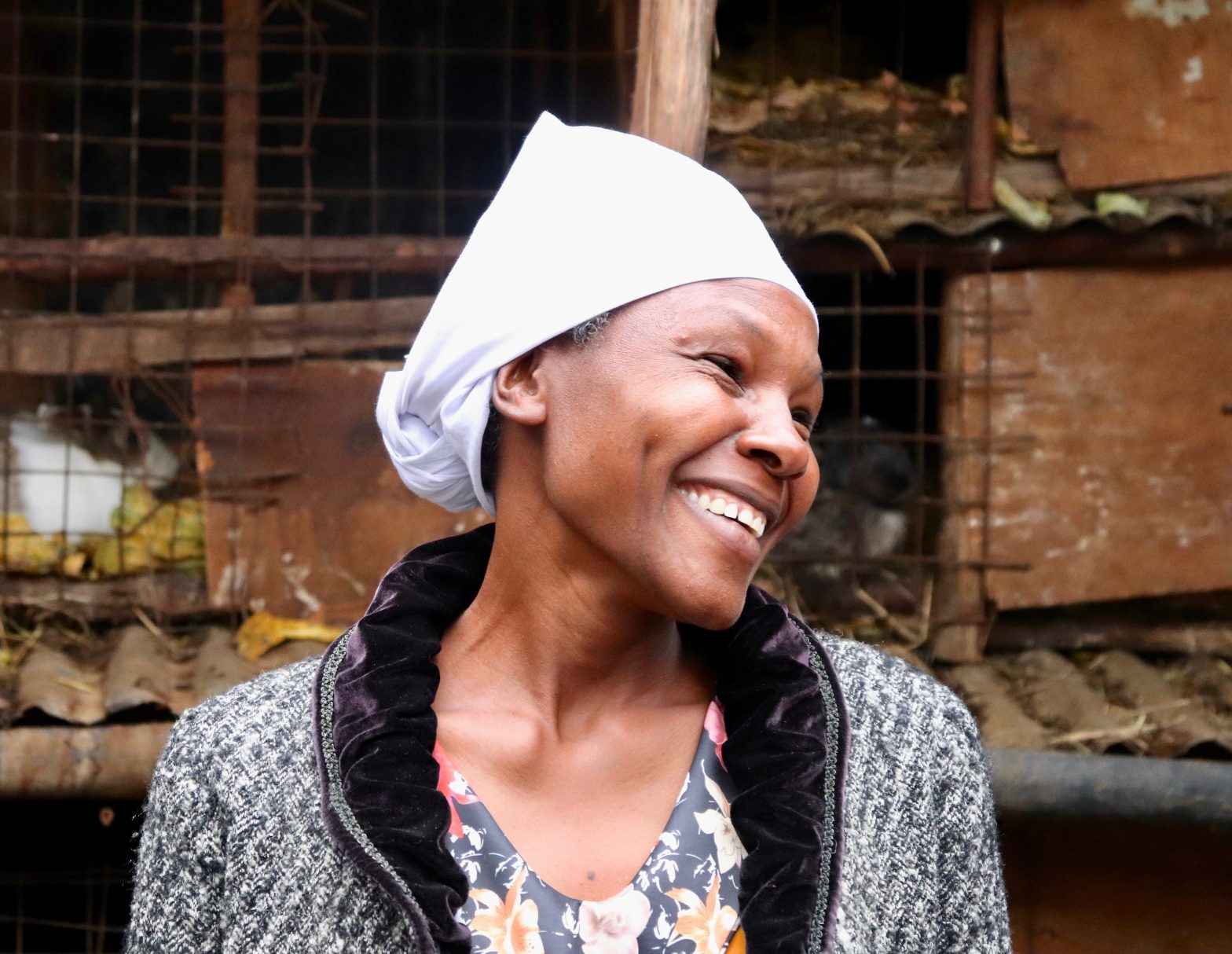
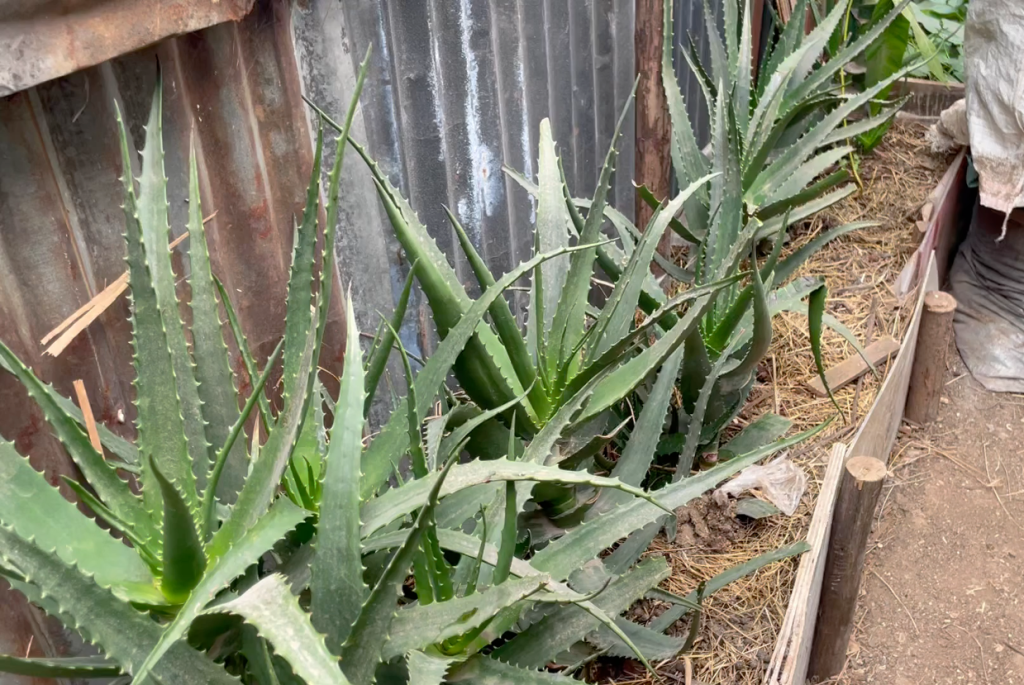
Nancy Wambui farms with her group and her 16-year-old son on a small plot in an informal settlement located in Makadara, Nairobi, Kenya. Before her training at Mazingira Institute in February 2023, Nancy faced challenges in her farming. “Before I came to Mazingira, I used to grow crops in-ground, where there was no soil”. This limited her crop’s potential because she had to rely on the soil available, it wasted water, and did not make good use of her vertical space. It is especially important for her group to make the most of their farm because, in addition to selling their products, they also care for their community with their yield. One Saturday every month, she and her group cook a healthy meal with vegetables from their farm for the children in their settlement. This is very fulfilling for her because it allows her to ensure her community does not go hungry.
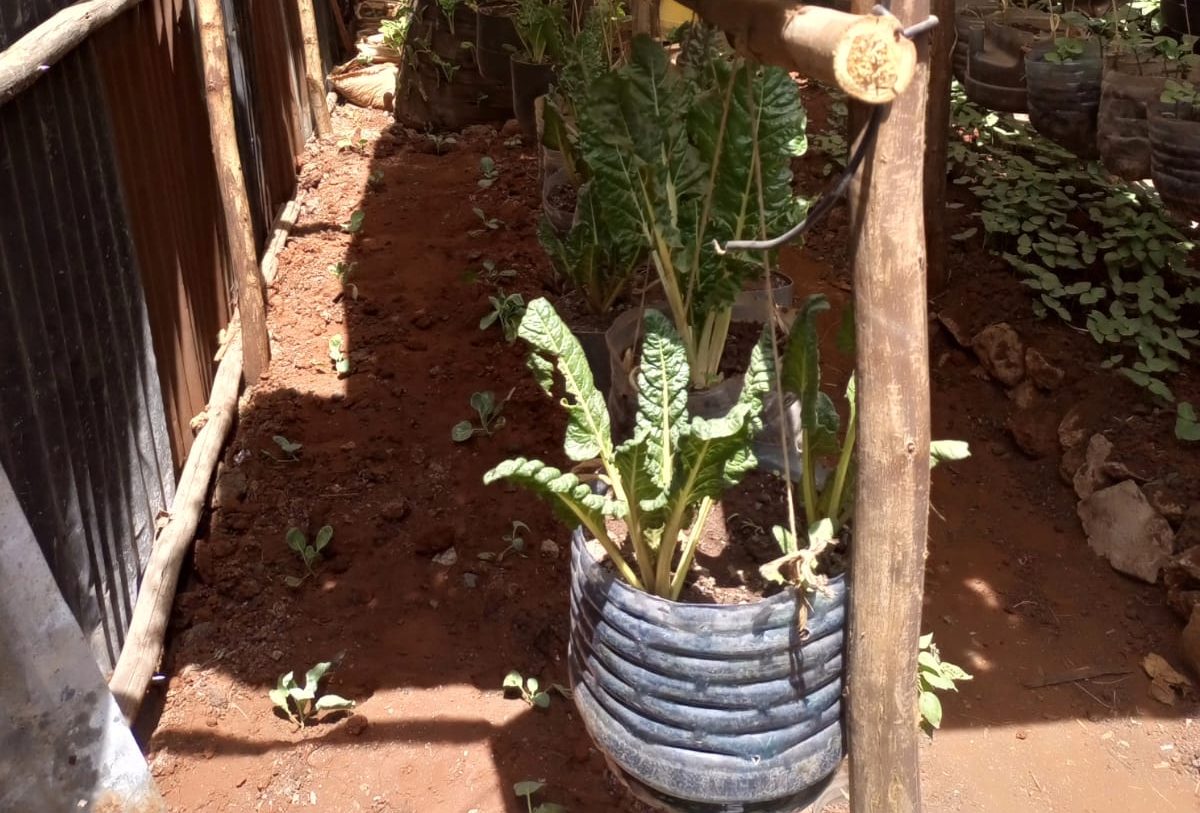
Nancy’s crops being grown in-ground before the training
Nancy was introduced to us through a Nairobi City County Food, Agriculture and Natural Resources extension officer during the pre-training phase of our first Gender, Urban Agriculture and Food System training program, an activity of the Women’s Spaces Project. The training, attended by 21 trainees (12 female and 9 male), all from Nairobi City County, equipped the farmers with knowledge of gender-sensitive urban agriculture. This increased the capacity of project beneficiaries, especially women, to engage equally in urban agriculture and food system activities. Nancy learned about a variety of techniques and practices that helped her improve her farming, “The training helped me to know improved skills. I learned about moist beds and mixing manure and soil together”. Urban agriculture technologies are developed for urban farmers like Nancy to help address challenges such as limited water, lack of good quality soil, and limited space. These include cone gardens, multi-storey gardens, raised moist beds, wick gardens, simple irrigation systems, and many more.
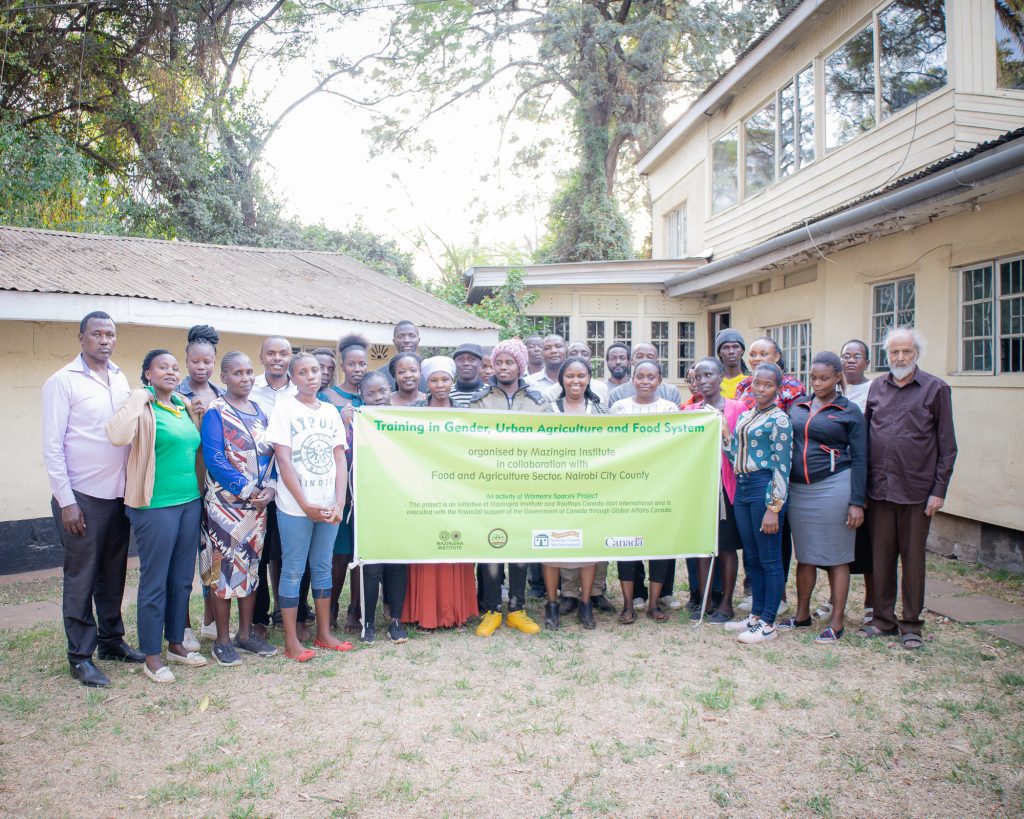
The group of trainees and trainers involved in the February 2023 Gender, Urban Agriculture and Food System training with Nancy, who can be seen in the front with the white turban.
After the training, Nancy returned to her farm and applied several technologies to improve her farming practices. “Since training, we have been able to change to moist raised beds which is working well now,” explained Nancy. She has also implemented a drip irrigation system using recycled materials and constructed a space-saving garden called a multi-story garden. These changes have allowed Nancy to create a nutrient-rich environment for her crops, and save valuable space, time, and water. This all contributes to the larger crop yield that Nancy and her group have observed, resulting in increased income as well as increased ability to provide healthy food for the community.
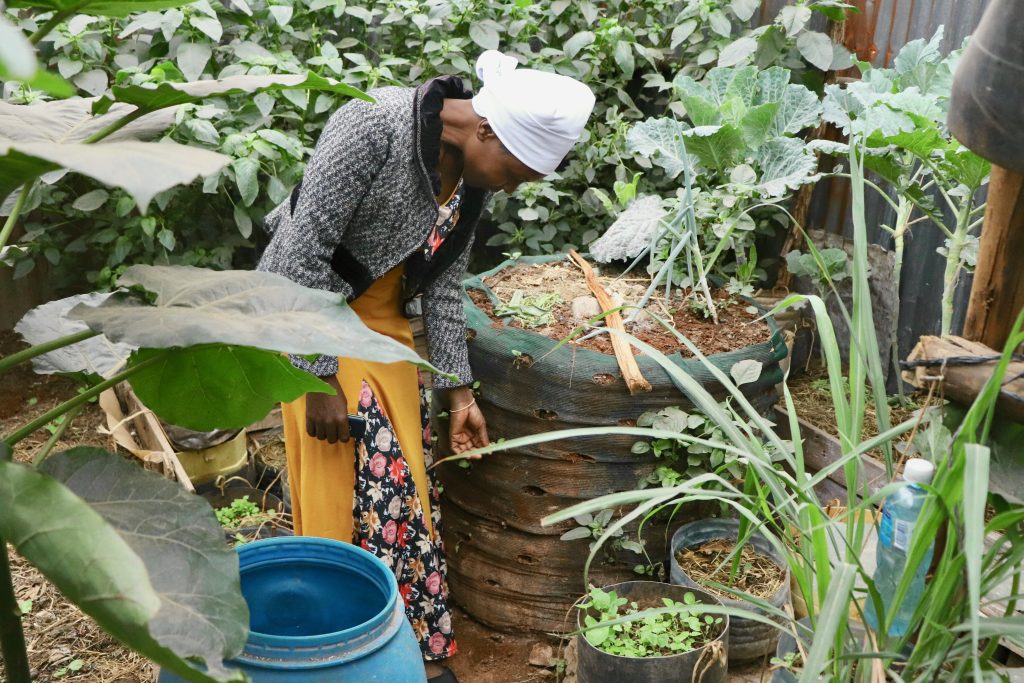
Nancy tending to her new multi-storey garden that she and her group have built since her training.
The raised beds that Nancy has built with her group in the area where they used to grow in-ground crops.
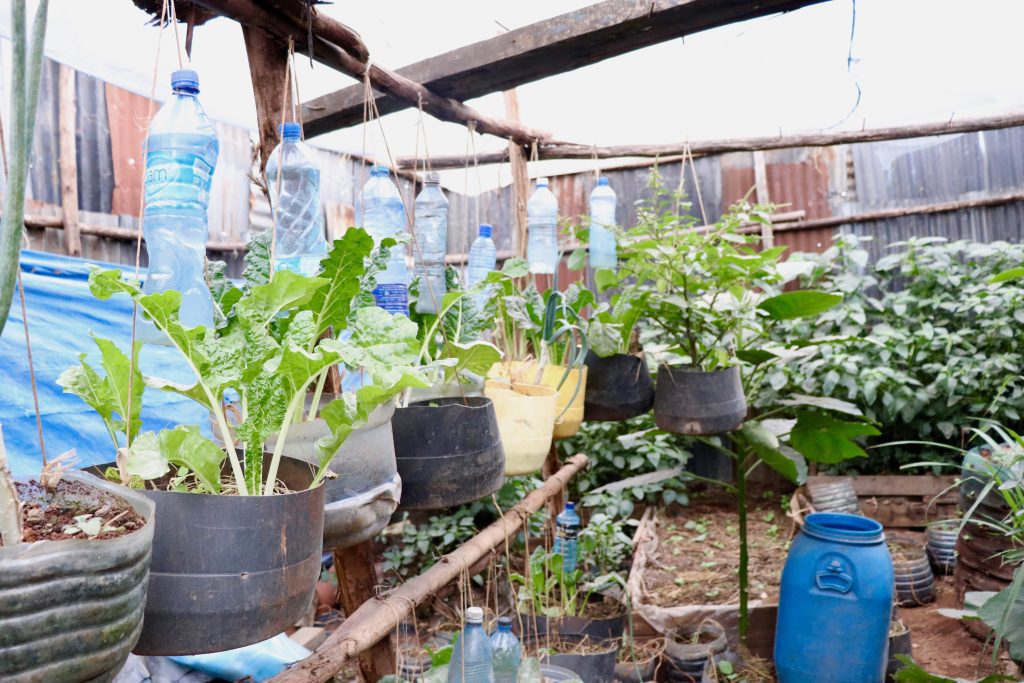
The new drip irrigation system that was installed after Nancy attended the training.
Through the GUAFS training, Nancy was provided knowledge of urban agriculture technologies to benefit not only her and her group, but her whole community. She has been able to provide food security to the families and children in her area, therefore increasing the reach of the Women’s Spaces Project’s impact. Nancy hopes to acquire more land in the future which would further increase her income and ability to provide for her community. It is important to the project that these urban agriculture technologies continue to be taught during the GUAFS training because of the impact they can have, not only in an individual’s life but for a whole community.
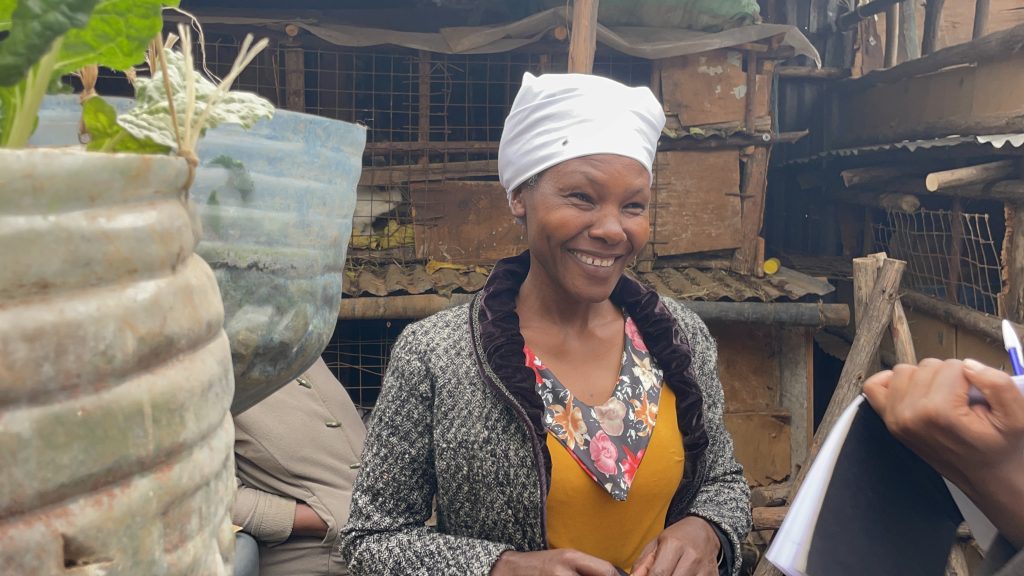
“I love my farm, to weed the vegetables and feed the rabbits. I feel very happy when I see our vegetables and rabbits are doing well because my kids and neighbours cannot go hungry when my farm is here.”
Written by Sarah Syptak on October 30, 2023.
The training that Nancy was involved in is an activity of the Women’s Spaces Project, an initiative of the Mazingira Institute and Rooftops Canada Abri-International, executed with the financial support of the Government of Canada through Global Affairs Canada.