August Gender, Urban Agriculture and Food System Training in Photos
Home » Blogs » August Gender, Urban Agriculture and Food System Training in Photos
August Gender, Urban Agriculture and Food System Training in Photos
NEFSALF
October 3, 2023
Facebook
Twitter
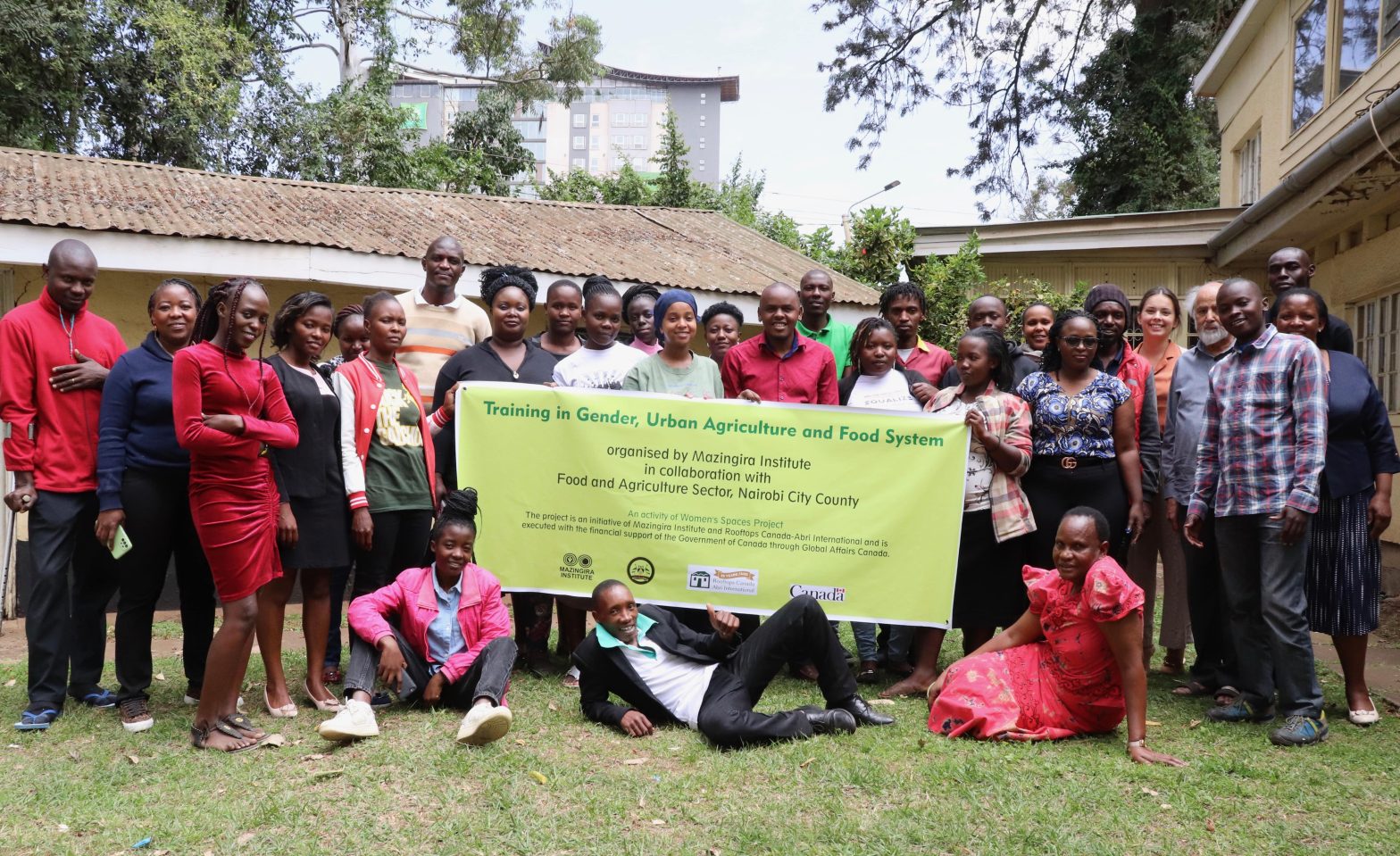
Our Gender, Urban Agriculture and Food System (GUAFS) training held in August was a huge success! We had 25 urban farmers from Nairobi participate in the 7-day training (16 female and 9 male). The training provided awareness on gender-sensitive urban agriculture, which led to increased capacity of project beneficiaries to engage equally in urban agriculture and food system activities. The training covered topics such as organic crop production and management, livestock production and management, organic waste management, domestic value-adding food processing, urban agriculture products marketing, and urban agriculture resource mobilization.
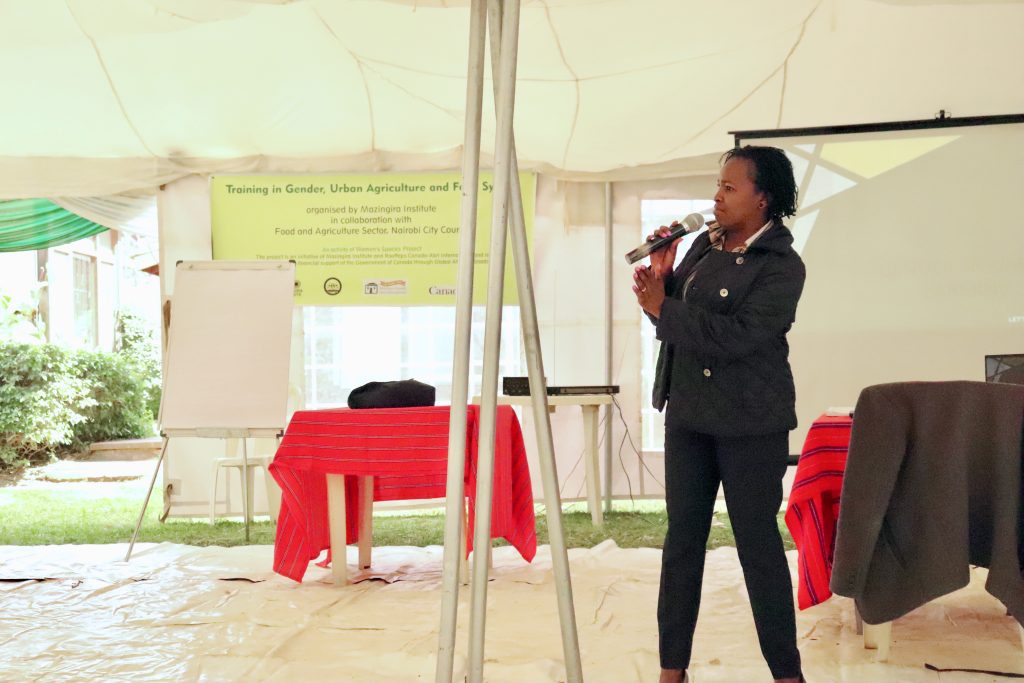
The training was organized in collaboration with the Nairobi City County (NCC) Food, Agriculture and Natural Resources sub-Sector. This is Joseph Kinyanjui, Deputy Director of Crops Development and Management, NCC sharing his remarks.
This is an example of a cone garden, one of the many urban agriculture technologies taught during the training. Technologies like these are beneficial because they are gender friendly due to their low labour requirements. Also, they make use of vertical space which is important in urban areas where land and space are very limited. Finally, they allow crops to be grown in unfavourable areas such as a rooftop pictured here. In addition to cone gardens, trainees were taught about multi-storey gardens, tyre gardens, wick gardens, and many more. This was taught by Dr. Margaret Mwaura, Crops Extension Officer, NCC.
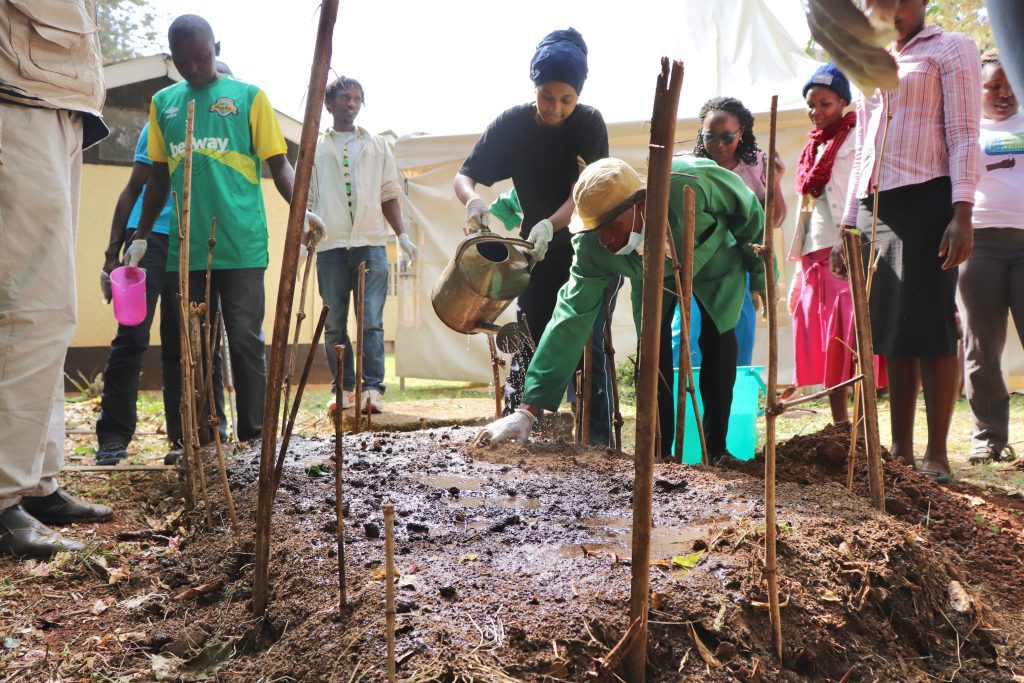
Trainees engaging in a demonstration lesson on making organic fertilizer led by Gladys Nakhulo, NEFSALF Mentor-practitioner. Farming organically is important because it takes a proactive approach to promote sustainability of soil, water, air and climate, biodiversity, and much more as opposed to treating problems after they emerge.
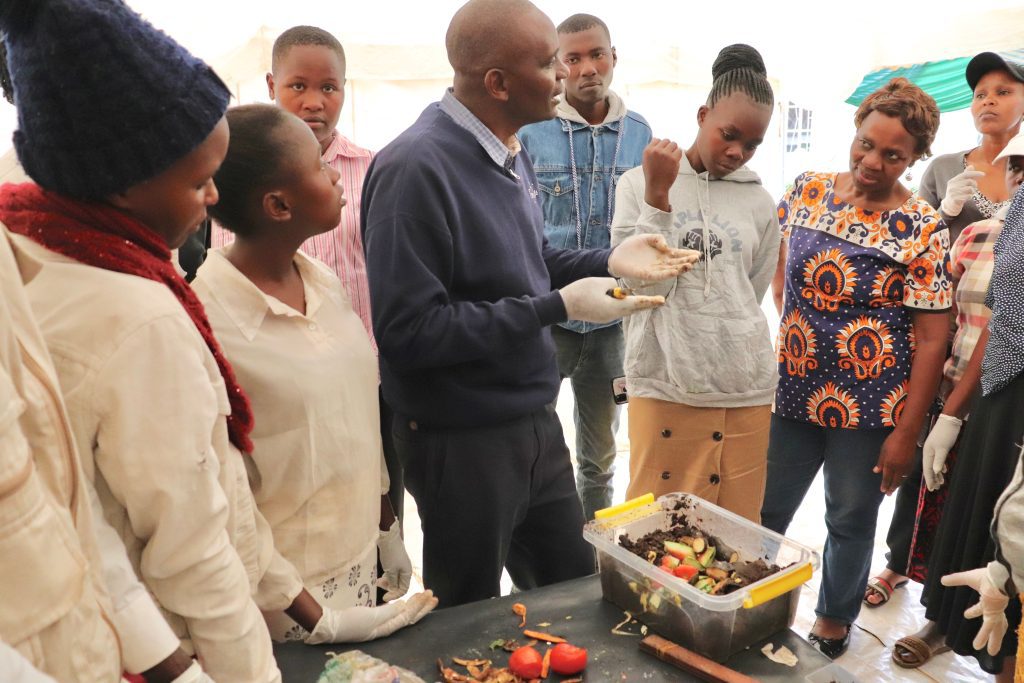
Zachariah Njuguna, Livestock Extension officer, NCC, teaching the trainees about farming Black Soldier Flies. This is a great way to use up kitchen waste which saves the environment, and produce protein for animal feed formulation which saves money.
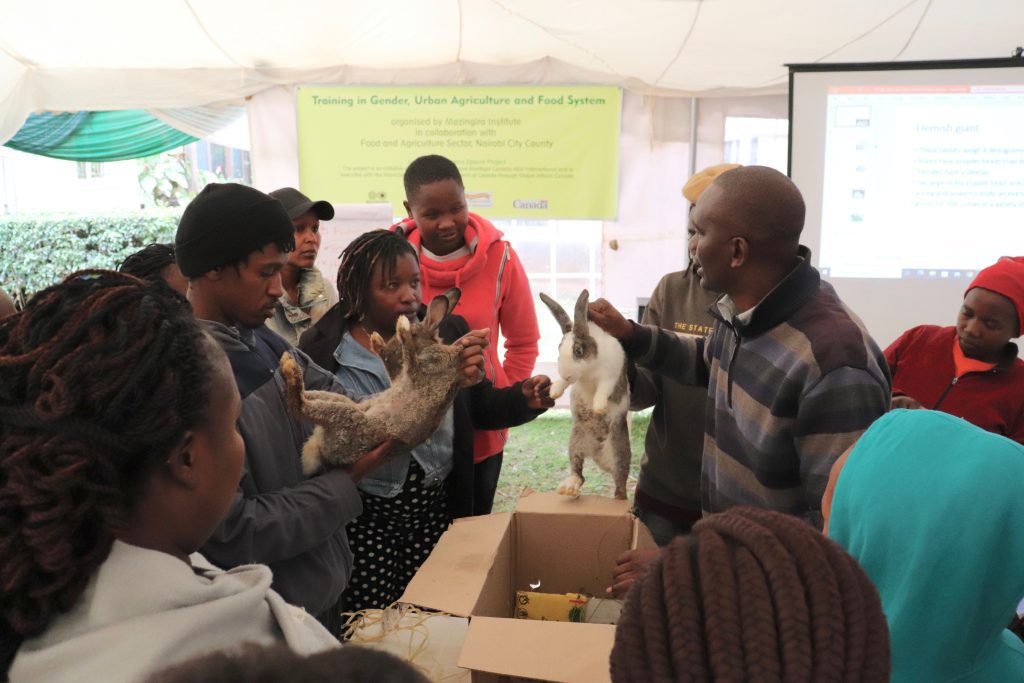
Rabbits are a small stock which is great for urban areas because they do not require much space. Here, Zachariah Njuguna, Livestock Extension officer, NCC, is teaching the trainees about rabbit keeping through an interactive lesson.
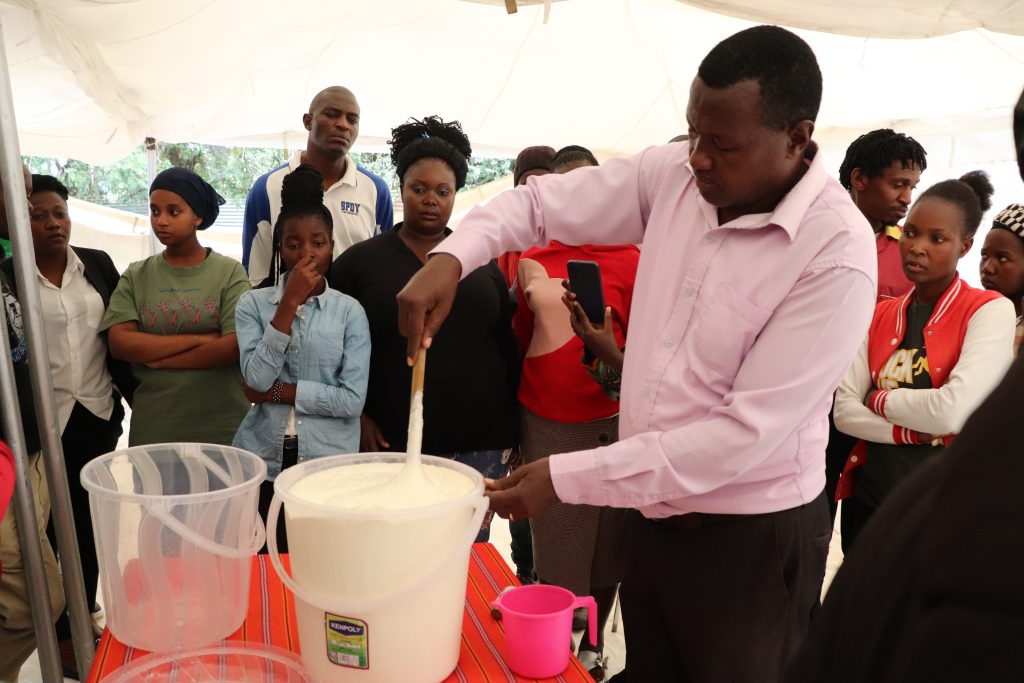
Yogurt making is a great area that farmers with limited space can explore. It does not require land to produce which is especially beneficial to young women who find difficulty acquiring land. Anthony Mugwanja, Livestock Extension Officer, NCC, led the trainees through a practical demonstration on yogurt making.
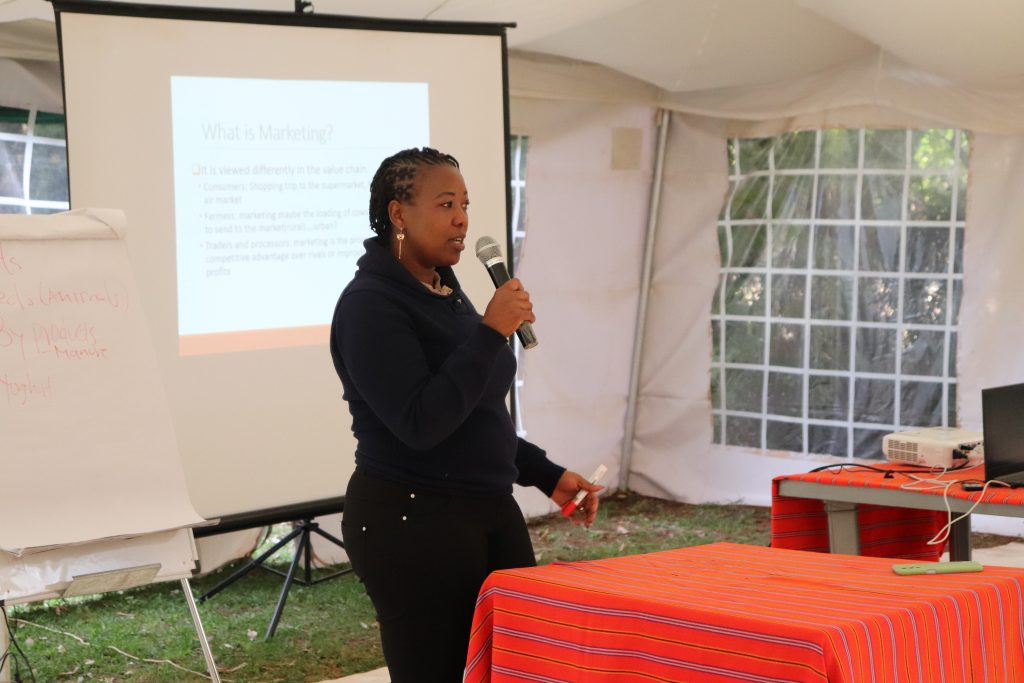
There were also several other important topics covered during the training. Mercy Wanjohi, Gender and Inclusivity Department, NCC (far left) taught about gender norms and perceptions. Gladwell Mwasi, Livestock Extension Officer, NCC (middle) taught the trainees about agricultural products marketing. Finally, Dr. Margaret Mwaura, Crops Extension Officer, NCC (far right) taught the trainees how to mobilize resources for urban agriculture.
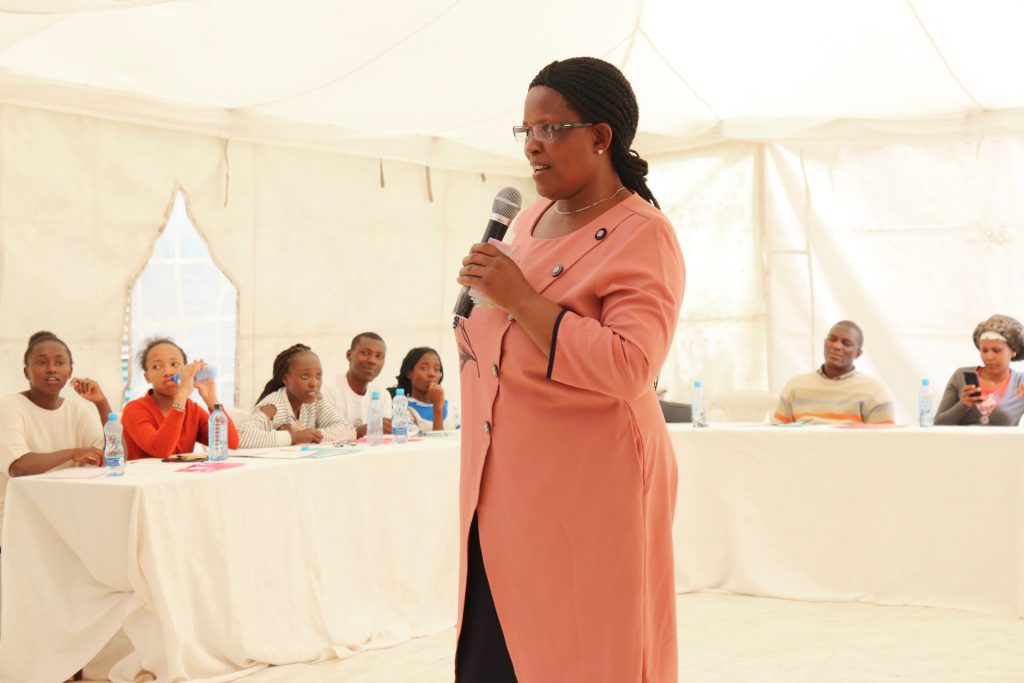
Implementation of training is very important which is why each trainee was requested to share their plan on how they will implement what they had learned throughout the week. Pictured here is Jackline Wesonga sharing her action plan that she will execute after the training. We look forward to following up with each trainee in the coming months to see their progress!
The training turned out to be a great success! The lessons were engaging, the trainees were interactive, and we are already seeing the improvements and changes the trainees are making based on what they learned. It is encouraging to see such enthusiastic young farmers coming through the Gender, Urban Agriculture and Food System training! We look forward to seeing similar success in the future.
Written by Sarah Syptak on October 3, 2023.
This is an activity of the Women’s Spaces Project, an initiative of the Mazingira Institute and Rooftops Canada Abri-International, executed with the financial support of the Government of Canada through Global Affairs Canada.
Check out our social media accounts to learn more about our activities and stay up to date on what is going on!