

- NEFSALF
- October 23, 2023
On May 9th, 2023, Mazingira Institute hosted a Gender Sensitive Extension Services Workshop in collaboration with the Food, Agriculture and Natural Resources sub-Sector, Nairobi City County (NCC). This workshop is one of the key activities of the Women’s Spaces project; an initiative of Mazingira Institute and Rooftops Canada – Abri International executed with the financial support of the Government of Canada through Global Affairs Canada. It was attended by 37 extension officers and facilitated by officers from the NCC Gender and Inclusivity Department, Food, Agriculture and Natural Resources sub-Sector and the State Gender Department, as well as Mazingira Institute staff.
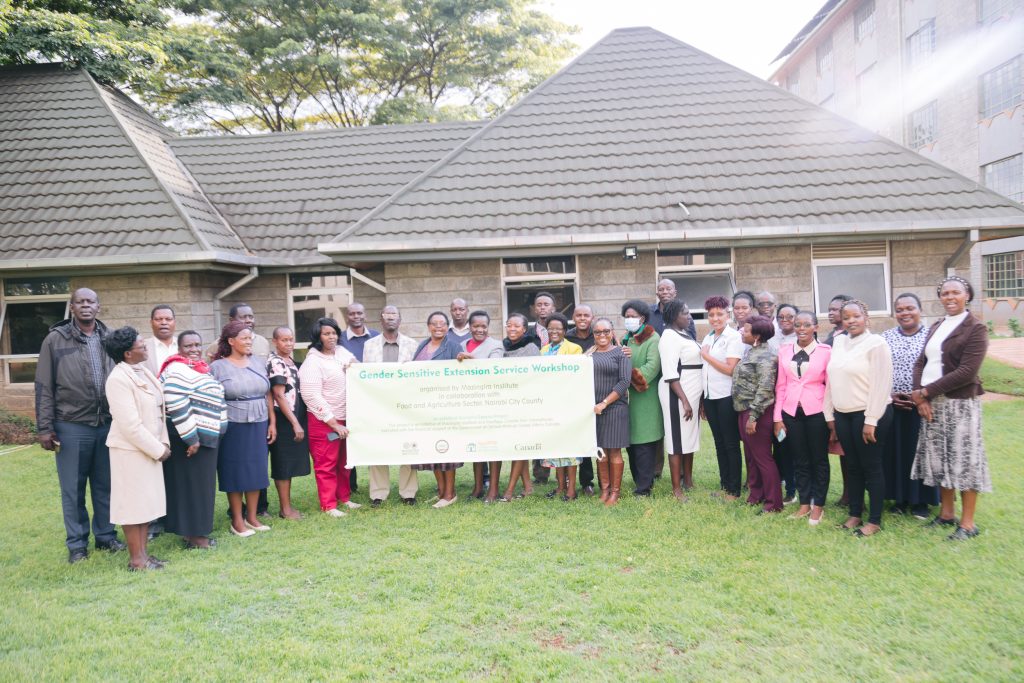
A group photo of the workshop participants.
The workshop’s objective was to sensitize extension officers on gender equality in the delivery of extension services. The covered topics included an overview of the Women’s Spaces Project, gender mainstreaming, the gender perspective in the County Integrated Development Plan (CIDP), gender equality and social inclusion (GESI) in urban agriculture, and the way forward. The motivation is to go beyond farmer training and instill a culture of gender equality within local government. Many factors hold women back in the agricultural sector; it is important to address these challenges and be aware of how extension services can better serve women. With workshops like these, local authorities will become increasingly sensitive to issues of gender and thereby have an increased capacity to implement participatory approaches that make urban agriculture resources available to all.
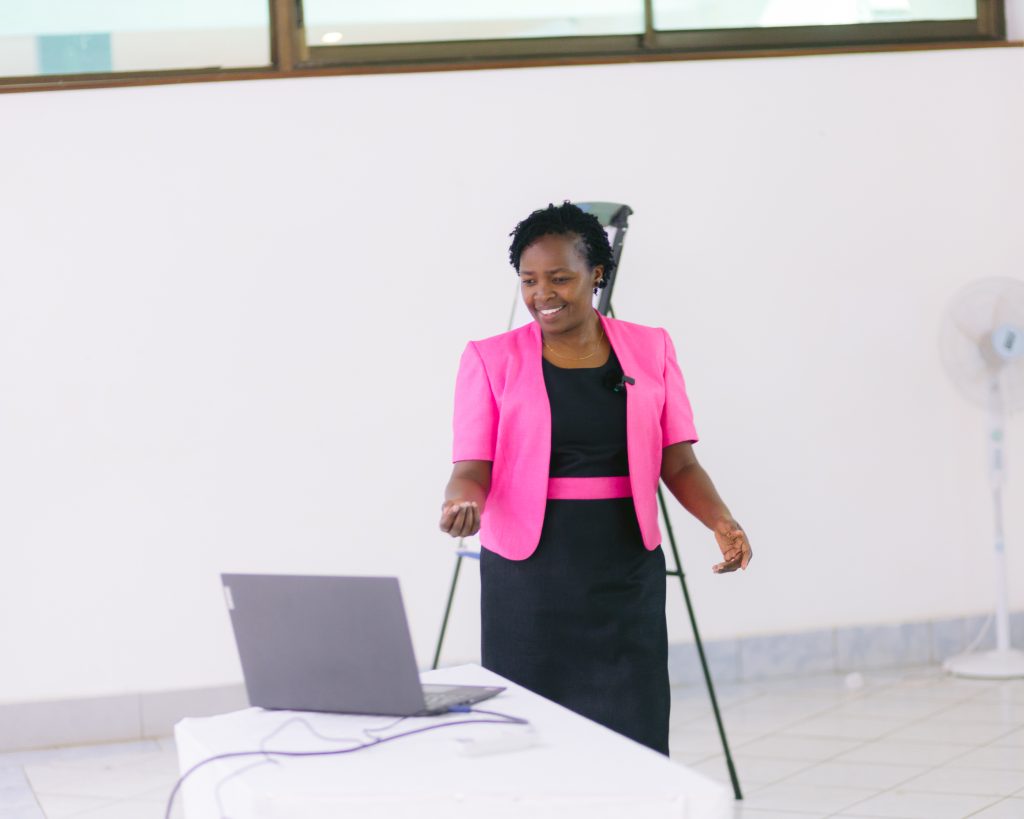
“Gender equality is a matter of human rights and social justice and promoting the same can benefit everyone. If one is excluded from a process, they will step back and not get involved. It is important to ensure everyone contributes and participates. Providing services that take everyone into consideration is of utmost priority.”
Mercy Wanjohi, Gender and Inclusivity Department, NCC
Gender Mainstreaming
During the workshop, Mercy Wanjohi, from the Gender and Inclusivity Department of NCC, explained the topic of gender mainstreaming. It is the process of considering the effects that any planned action may have on women and men. This can include policies, legislation, and programmes. This information then informs the design, implementation, monitoring, and evaluation of policies and programmes. Gender mainstreaming is, therefore, a strategy to ensure that women’s and men’s concerns and voices are included in all spheres of life to benefit women and men equally. This is established as a global strategy for promoting gender equality. This is vital to the Women’s Spaces project because of the many barriers that women face in the urban agriculture sector and accessing government extension services. Gender mainstreaming provides an avenue to address these challenges and ensure equal access to resources.
Barriers to Accessing Extension Services
Mercy Wanjohi went on to share some of the main barriers that prevent women from receiving support. One of the main barriers women face in urban agriculture is tied to cultural norms. Most people believe that women are only farm helpers rather than farmers in their own right. This results in programs that don’t reflect the existing situation. For example, women often miss trainings due to the numerous responsibilities they hold surrounding the home. Programs and trainings need to be scheduled in a way to accommodate women’s and men’s schedules to be fully inclusive. Also, women do not have control over resources due to cultural norms, making it difficult for a woman to make decisions.
Another main barrier that Mercy touched on is concerned with women’s lack of access to credit and technology. Female farmers often face challenges in accessing credit and financial resources. They are forced to turn to women’s self-help groups or family, which help in some regard. Also, many farmers suffer from a lack of access to the internet. This restricts them from accessing social media, mobile apps and other web-based communication, therefore limiting their information. Finally, women often are not able to attend trainings because they lack the funds to do so, leaving them to rely on their spouse. If the spouse assesses that the costs outweigh the benefits, then he will not provide the support for her to attend.
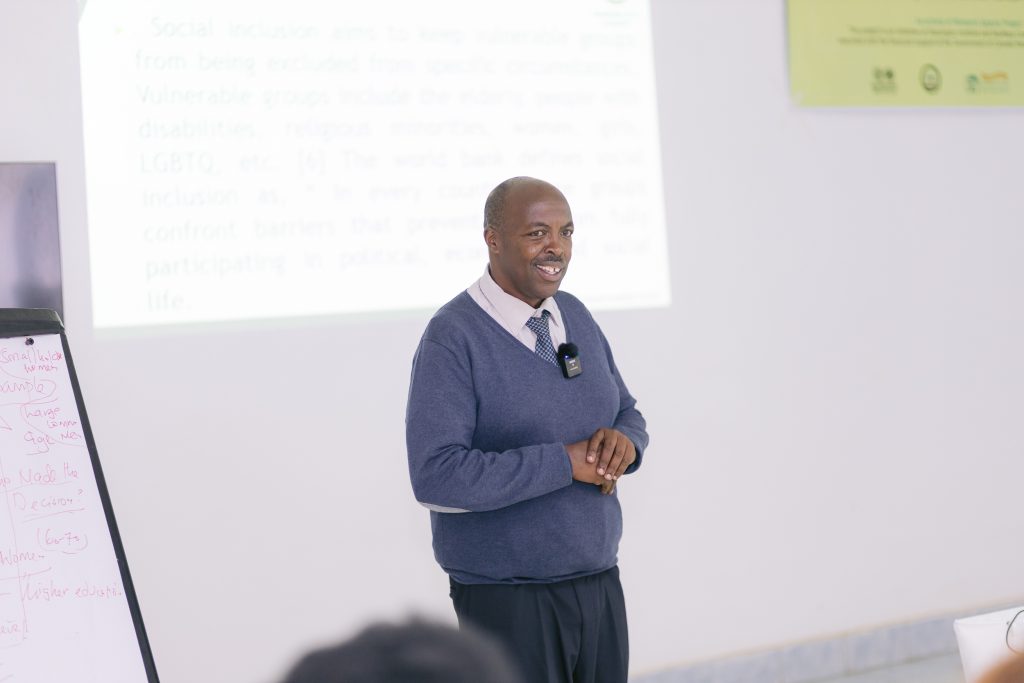
“When more women, youth and men are empowered, it is an indication that we are succeeding.”
Joseph Kinyanjui, Deputy Director-Crops and Gender Champion, NCC
Gender and Social Inclusion in Urban Agriculture
According to World Vision, gender equality and social inclusion (GESI) is intended to eliminate existing barriers, increase access, and enable decision-making and participation of the marginalized population. One can be excluded based on gender, race, geographical location, religion, level of education, social class, disability, marital, and immigration status. Gender equality, which promotes equal access to resources, opportunities, and human rights is one way to address such bias. The idea is to create an environment where everyone’s voice is heard by ensuring everyone has a seat at the table.
Gender equality isn’t about women and girls only. Men and boys are also part of the GESI equation. For real change to happen, everyone needs to be involved. Additionally, gender equality is not a Western or foreign concept. It is also not an attempt to take away men’s rights and is not only meant for gender specialists.
The United Nations defines social inclusion as “the process of improving the terms of participation in society, particularly for people who are disadvantaged”. These groups may be excluded not only through legal systems, land, and labour markets but also by discriminatory or stigmatizing attitudes, beliefs, and perceptions. This kind of social exclusion robs individuals of dignity, security, and the opportunity to lead a better life.
Workshop Outcomes
These fundamental topics were followed up with the NCC’s County Integrated Development Plan for 2023-27 as well as their Annual Development Plan for 2023-24. These highlighted the key activities that the NCC is carrying out to target the concerns around GESI in the agriculture sector. Their hope is that their efforts will ensure that both women and men are included and that it fosters gender equality.
In addition, the workshop concluded with breakout sessions to allow the participants to reflect on what they learned and develop some ideas on how to apply the same. Here are just a few of the ideas that were shared:
– Training and meetings should be conducted at an appropriate time when both women and men are available in addition to holding these at central locations that are easily accessible.
– Transportation should be provided to farmers to facilitate their mobility. Providing childcare services would also enable women to attend trainings and meetings.
– Extension officers should target group meetings or church gatherings that women often frequent to tackle the timing challenges.
– Capacity building on gender mainstreaming should be provided to staff continually.
– A gender committee that handles gender issues should be put in place for the Food and Agriculture Sector and other relevant sectors.
– Formulating messages, innovations, and technologies that target specific groups like women, youth, and persons with disabilities can promote GESI.
– Sensitization efforts to demystify gender stereotypes and eliminate cultural barriers are essential.
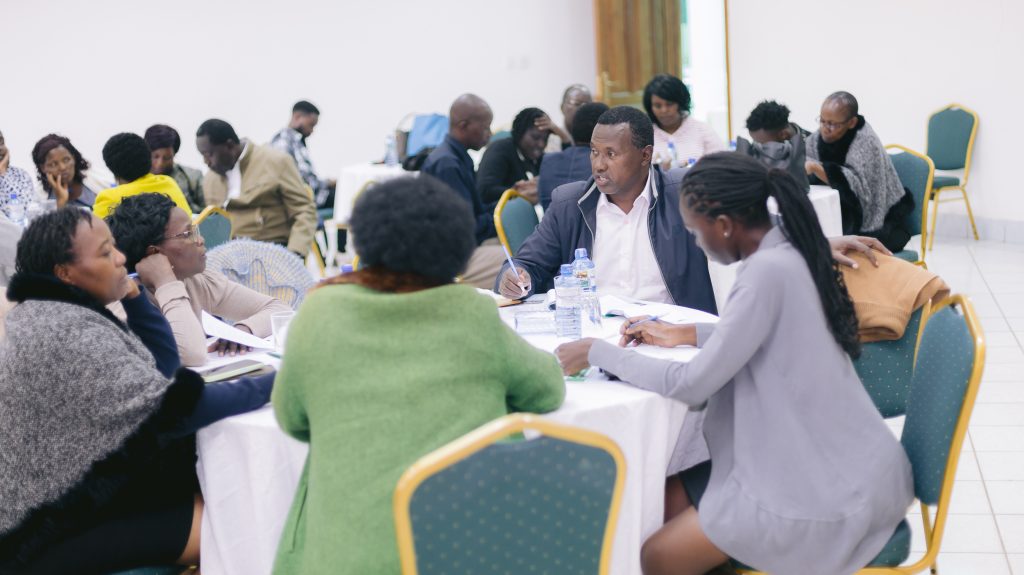
NCC Food, Agriculture and Natural Resources sub-Sector Extension Officers engaging in a brainstorming session to determine how extension services can be more gender sensitive.
Relaying the importance of gender-inclusive programming and assistance is one of the key aspects of the Women’s Spaces Project. Without institutional support, understanding, and change, widespread improvements will be difficult to accomplish. The hope is that after these workshops, extension officers will hold greater sensitivity towards issues of gender and their services will be more inclusive. Workshops like these lay the groundwork for women and men to flourish in their urban agricultural practices, therefore decreasing poverty levels and strengthening Kenya’s food system. We are excited for the change to come!
Written by Sarah Syptak on October 23, 2023.
This is an activity of the Women’s Spaces Project, an initiative of the Mazingira Institute and Rooftops Canada Abri-International, executed with the financial support of the Government of Canada through Global Affairs Canada.